
Overview
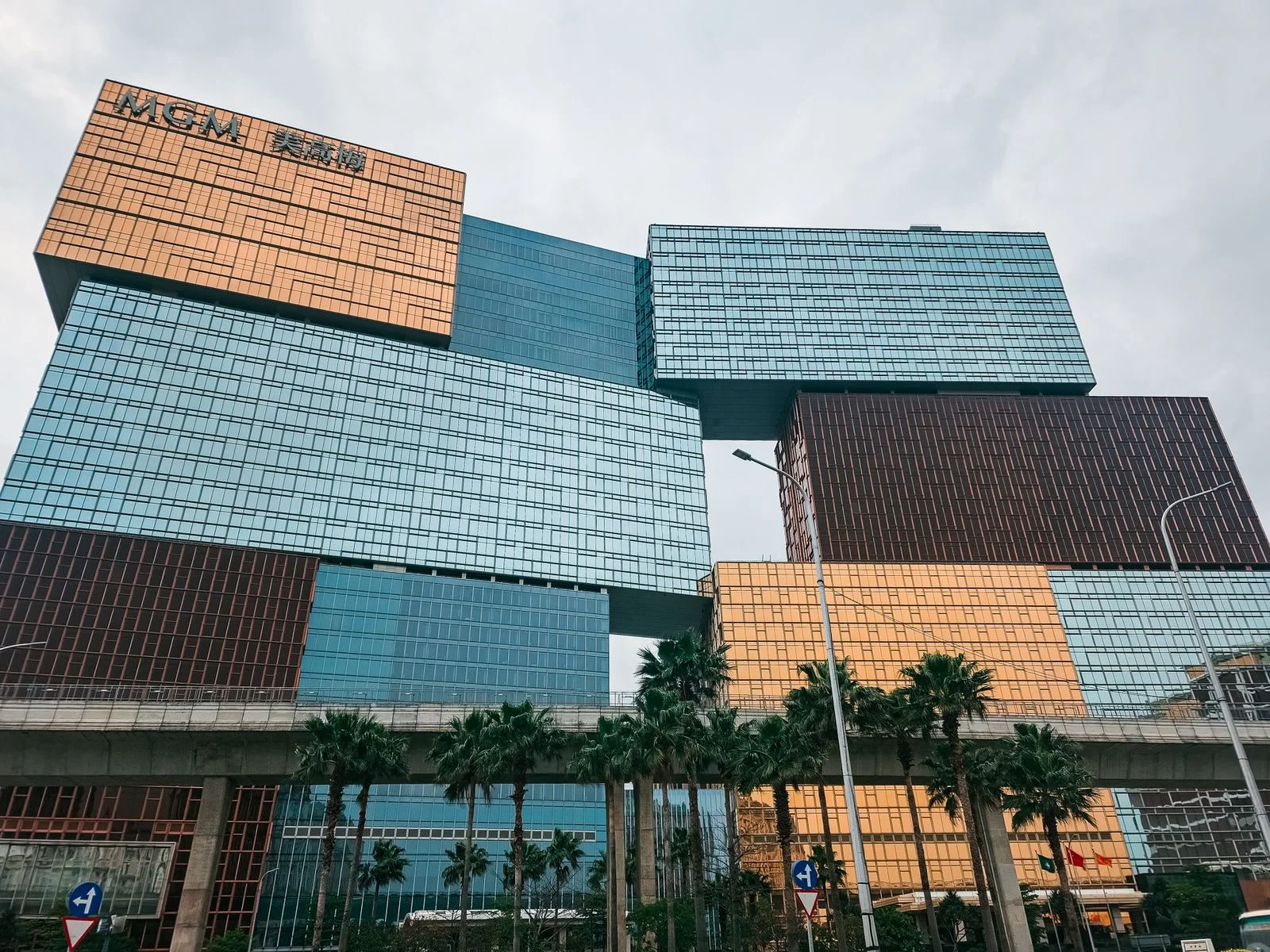
MGM China reported a record third quarter on October 28, 2026, gaining market share in Macau while the broader casino market weakened. The operator’s results point to stronger performance at its premium-focused properties, but also show why rising visitor numbers alone may not translate directly into higher gaming revenue.
Key takeaways
- MGM China’s third-quarter revenue rose 5% year on year to approximately HK$8.9 billion, while adjusted EBITDA reached approximately HK$2.4 billion, both records for a July-to-September period.
- The group’s Macau market share reached 17.1%, divided between MGM COTAI at 10.5% and MGM MACAU at 6.6%.
- Macau’s daily GGR declined 4% year on year to MOP655 million, while MGM China’s daily GGR increased 5% across its 2 resorts.
- The company has started renovating approximately 100 suites at MGM MACAU after completing a suite-conversion project at MGM COTAI earlier in 2026.
Market backdrop and the competitive shift
Macau’s third-quarter figures, published by the Gaming Inspection and Coordination Bureau (DICJ), showed casino GGR falling 3.8% year on year and 1.3% from the second quarter. Mass baccarat, the largest revenue category, declined 7.9% year on year to MOP33.61 billion. The broader mass segment, including slots and electronic table products, fell 5.2% to MOP43.31 billion.
The market was not uniformly weak. Slot GGR rose 18.8% year on year to MOP4.09 billion, while VIP baccarat revenue increased 0.1% to MOP16.91 billion under the DICJ’s classification. These figures are not directly comparable with operator-reported segments because concessionaires use different reporting bases for VIP activity.
Against that backdrop, MGM China said daily visitation at its properties rose 10% year on year, with mass GGR including slots also up 5%. Macau’s average daily visitor arrivals increased 8% to 122,139 during the quarter. The company attributed part of the citywide gaming pressure to the temporary impact of World Cup tournaments.
MGM China’s property performance and asset strategy
MGM COTAI generated approximately HK$5.4 billion in revenue, compared with HK$5.1 billion a year earlier. Its adjusted EBITDA rose to around HK$1.52 billion from HK$1.46 billion. MGM MACAU recorded approximately HK$3.5 billion in revenue, up from HK$3.4 billion, but adjusted EBITDA declined to about HK$865 million from HK$914 million.
The split suggests that the Cotai resort was the stronger earnings contributor in the quarter, while the peninsula property is being positioned for a more premium role. Chief Executive Kenneth Feng said, “The higher-end market segment continues to drive growth.” The company linked that momentum to refurbished rooms and premium spaces, although the supplied results do not establish how much of the performance came from renovation activity, customer mix or other operating factors.
MGM China said its renovation of approximately 100 suites at MGM MACAU had commenced. The stated plan is to position MGM MACAU as a premier peninsula venue and MGM COTAI as a destination for premium travellers. This is a planned asset-improvement initiative, not a completed renovation.
MGM China also reported approximately HK$25.6 billion in total liquidity as of September 30, comprising bank balances, cash and an undrawn revolver. Its majority owner, MGM Resorts International, separately reported MGM China revenue of $1.1 billion and segment adjusted EBITDAR of $264 million. The parent’s figure was affected by an intercompany branding licence fee of $41 million, which is eliminated on consolidation.
Visitor growth, hotel demand and Malaysia relevance
Macau’s October Golden Week provided a stronger tourism test but not a definitive gaming conclusion. The city recorded 1.143 million visitor arrivals over 7 days, while average hotel occupancy reached 91.3%. At the same time, the average room rate was approximately MOP1,677.3, down 1.7% year on year. MGM China said visitation at its properties during the holiday rose 10% year on year.
For Malaysian B2B operators, suppliers and investors, the results underline the importance of separating tourism volume from gaming monetisation. Macau welcomed more visitors, yet citywide GGR declined in the preceding quarter and room rates softened during Golden Week. MGM China’s relative outperformance may therefore be more relevant as a case study in property positioning, premium inventory and market-share capture than as evidence of a broad-based Macau recovery.
The developments concern Macau resorts and do not indicate that MGM China has launched these products, rooms or commercial initiatives in Malaysia. They may nevertheless matter to Malaysian businesses tracking regional integrated-resort competition, premium customer acquisition and the balance between gaming, hospitality and non-gaming tourism revenue.
Event timeline
- October 22, 2026: DICJ quarterly data showed Macau casino GGR down 3.8% year on year in the third quarter. - October 28, 2026: MGM China announced its unaudited third-quarter results for the period ended September 30. - October 1–7, 2026: Macau recorded 1.143 million Golden Week visitor arrivals and 91.3% hotel occupancy. - After the third-quarter update: MGM China said the approximately 100-suite renovation at MGM MACAU had commenced. The next material indicator will be whether MGM China can sustain its share gains after the seasonal holiday period and convert premium positioning into durable earnings growth. That assessment will require later operating results rather than relying on visitation or planned renovations alone.